Showing posts with label politics. Show all posts

Wednesday, November 30, 2011

[Politics] FDI in Multi-brand Retail


Last few days, Government has been trying to pass a bill which raises the FDI limit in  multi-brand retail chains to 49%. However, as usual Left has opposed which comes as no surprise. What really surprises me is the opposition by BJP as they are considered to to be the progressive right wing as far as politics of economics goes. Either ways some of the direct and indirect benefits of raising the limit is given below:

Advantages
  • Inflation in India is mainly a supply-side issue. The rising disposable income of middle-class is demanding more with minimal increase in efficiency from the supply-side. Government in its bill is asking the foreign retailer to invest 50% in the back-end process. Improving the efficiency will improve the farm productivity and thus increase supply reducing the inflationary pressure. The cost of important food items will reduce in the long run. This is what BJP, CPM and "common man" actually want.
  • Any new retail-chain creates multitude of job-opportunities at the front-end. This is clearly evident in the number of malls that we have. Even in IT/ITES services, the housekeeping and security gives a good chunk of population a regular monthly income. Additionally, the setting up of back-end infrastructure, supply chain logistics will create another set of jobs.
  • Currently there is no provision of cold-storage which causes around 40% of the supplies to rot. With superior technology and prior experience of foreign retail chains, this loss will be minimized. As they are partnering with Indian firms, this technology know-how will be transferred to Indian firms too.
  • To us consumers, apart from the cheaper food items, we will get to have more choices and thus improve our standard of living.
  • Big organizations can set up deals directly with farmers thus giving the farmers better deal. Additionally, big organizations will provide latest technologies and best practices which will ensure more yield per area  of irrigation. The best example here is Amul which leverages farm produce across Gujarat and thus help give the cattle-owners good deal.

Disadvantages

  • The major chunk of people losing out here will be the small kirana stores and the middle-men. However, as with other industries, the smartest of them will find ways to survive under changing business scenario.
  • The second argument is building up the cold storage and infrastructure is government  business. Do we really need another 2G proportional scam where tax payers as usual are looted of their money or better invite private sector which already has the tech know-how and experience in implementing it?
  • Another argument is the Wal-mart and Tesco taking over the entire supply-chain. Well, if the bill is debated in the parliament, I do not see a way, by which government cannot impose certain curbs to prevent taking over of entire supply chain.
So at the most, the loss will be limited only to the kirana store owners and middle-men. So not sure, what the opposition is opposing here. Are they opposing the welfare of the citizens over selected kirana store owners and middle-men?

PS: I have given a bit simplistic view here. Getting hard core numbers would have resulted in similar conclusion. However, in interest of sleep and a bout of laziness has prevented me from doing so. 


P.PS: Extensive analysis available here

Monday, April 25, 2011

Is Lokpal Bill enough to tackle corruption in India?


Over the past couple of weeks, India as a nation has witnessed the powers of one determined Gandhian. Joining with him in his quest for stronger Lokpal bill, were thousands of Indians which included both netizens and citizens whom the aristocratic political class term as "Aam admi". Government or rather PM Manmohan Singh did a good job in defusing the entire agitation by giving in to the demands as any further delay would have caused a revolution leading to his government's downfall. At the heart of the issue is the Lokpal Bill aimed to fight corruption in India which was first conceived in 1969 but still waiting to be passed in the parliament.

Though I completely respect Anna Hazare's effort to bring this issue to the fore, I am more inclined to agree with Kapil Sibal's view that the bill's scope in tackling corruption is limited. The main reason is that at the end of the day, it is only a bill. And a bill like many others can only go so far in addressing the tackling corruption. Moreover, loopholes always exist in any law and most scamsters are intelligent enough to exploit these or at least drag the case till they are old and frail when it would eventually not matter. I believe a similar story would be play out with the Lokpal Bill. Of course, it can be argued this is an important step forward. No doubt on that. The point I am trying to make is corruption exists mainly due to the systemic inefficiencies and creating laws or acts can only deter corruption as much.

These systemic inefficiencies create an incentive to be corrupt. Or in other words it rewards the corrupt and punishes the honest. Thus to remove corruption, these systemic inefficiencies have to be removed which can only be achieved through better governance and not by creating more laws. One of the most proven weapons in improving governance is the use of technology. The other two weapons would be the people in the government and Aam Admi.


Technology
Yes I am in technology and technology rocks when you want transparency and accountability. System takes care of that. Many state governments have invested in technology at various fronts to improve the governance. Even the central government, has tried to implement wherever, it sees limited opposition. Examples which I am aware of are e-filings of tax return, the generation of PAN card and the most ambitious project taken up so far is UID (Unique Identification System). The most important aspect of technology is that it reduces human intervention. For example for PAN card, anyone with an internet connection can go and lookup the site for information on how to fill the form and then fill, print and post it to the concerned department. The entire process can take at most 3-4 hours which can be done from the comfort of your home. (Discounting the trip to the post office :) ). Moreover, you can track the application status online and rectify the form if needed. This has removed the need of bribing 
  • someone to learn how to fill the form
  • to track the status
  • to move the application if it gets stuck anywhere.
The second example where technology can be greatly useful is ensuring traffic rules compliance. Any reason why traffic policemen encourage bribes? Some of them are given below:
  • He does not have to create a receipt for the offense.
  • He does not have to listen to the offender's defense stories and his constraints which caused him to break the rule.
  • A traffic chaos may happen during the time he was creating a receipt and thus have to work harder.
So how can technology reduce corruption?  Jumping of signals, riding in the wrong lane or over-speeding can all be captured through a camera which captures the registration number and send the ticket to the offender's home. At the same time, an entry can be made against the driver's license card, to ensure tracking of the number of offense and also auto-debit the fine amount from the offender's bank or credit card account. Believe this is already implemented in some countries. Additionally, if a policeman catches an offender, he can simply swipe the driver's license card and the system will do the rest for him. Although this looks like a pipe-dream, they are inherently doable. Believe some developed countries have this system already in place.


People in the Government
Consider a clichéd government employee's job profile. He is assigned a task which he has to do for years. Only if the person above him retires or dies, does he have any chance of growth. Naturally boredom sets in and the absence of future growth makes him neglect his current duties. The only incentive for him to work is the bribes from people who want to get things done a bit quicker as there is no enforceable SLA for the government employee to work. The situation can only be improved if there is change in this culture. 
The peer pressure tactic is the best option to effect a culture change. A strong leader who can influence 10 % of his direct reports can bring about this change. By making this 10 % influence another 10 % and so on, can radically change the DNA of the government office. The change will be gradual but will be effective. Ricardo Semler's effort at Semco SA can be taken as an example for this. 
Thus if as a team, they decide to get things done within the SLA and without taking bribe, even the most lazy person would have to work. In a way it can be be looked at as an HR issue. In the end, the government needs leaders who can bring about the change in the minds of the people within departments. 


Aam Admi
How can a "Aam Admi" say no to corruption? He is under pressure virtually from everywhere. Pollution, oppressive heat, potholed laden roads, and public commute make the daily trudging to the office a bigger ordeal than it already is. Apart from this he has to work under abusive bosses, handle intrusive neighbors and demanding relatives. In all this, if a government process takes too long, he cannot afford to keep his life aside till the government process is completed. He has to complete that as well in the melee that his life is in.  Yet not taking the easier path may not make it easier to get it done. This happened to my friend who needed to get a No Objection Certificate (NoC) to transfer his bike from Mumbai to Bangalore. He chose the easier route. He called up an agent who asked him Rs. 1500 to get everything done in 3 days. Fortunately the agent failed to turn up when my friend went to get the NoC done. Out of desperation he tried to get it done the right way. Eventually he got it done within 2 days itself and the cost - Rs. 200.


Probably our demand to get it done easier is far more than the demand to get it done by the correct process. Due to this sometimes the time saved by the shortcut method may be actually time lost in the overall equation. A bit of patience and a bit of effort in understanding the process may just well be the solution to reduce the corruption. Additionally an emphatic NO can also do the trick to a large extent.

Presented some of my thoughts based on the drama that has been unfolding around LokPal for past few weeks now. Do post your valuable feedback and solutions in the comments section.

PS: Just thought of focusing on the bigger picture rather than just the Lokpal Bill. Also on a personal front too have bribed my way out quite a few times. Thats a change that I need to bring in within myself :P 

Monday, February 22, 2010

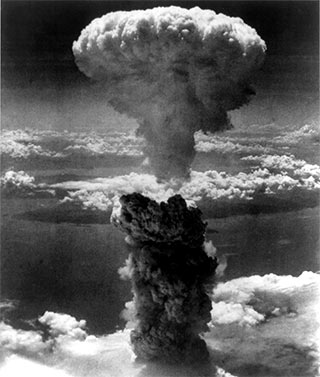
Lets go to war!!

Courtesy:http://whitewhaletheatre.files.wordpress.com/2009/08/nuke-war-h0011.jpg

 
Day 1
The recent terrorist attack on Pune coupled with the outrage felt across India, the Indian government declares a limited offensive against Pakistan

 
  • to protect India's sovereignity against the terrorists based in Pakistan
  • to dismantle the terror infrastructure across the border
  • to ensure its citizens are safe and do not have to fear the terrorists

Majority of India supported it. India calls up Obama and tells US to stay away from it as the issue is between India & Pakistan and the situation deals with the right of India's sovereignty, just as US sovereignty was attacked during the 9/11 attack.
Suddenly Pakistan wakes up from lazy confidence that India will not attack it and Pakistani PM Zilani with a brave front declares - let India attack and we will show them what Pakistan is.
Meanwhile the maulas of Pakistan calls all the people in the name of Islam to unite and fight against Hindu India. Zilani calls up Obama for his support against India. Obama says US is committed to maintain peace across the globe. China declares India as the aggressor and it declares it will protect Pakistan against any Indian aggression.

 
Europe declares the issue can be resolved with talks and India should not go to war. A hurried meeting of UN Security Council is held and the permanent members of the Security Council declare India cannot go to war with Pakistan.
The Pentagon simulates the different war scenarios between the two countries and declares all different scenario point out towards a nuclear war. The whole world is tensed. 

 
Day 2
The Indian army fires the first shot across the border and shells start getting exchanged on the border. World Bank threatens India that it will stop its aid for various projects. Indian army starts advancing in the Pakistan-occupied Kashmir. Pakistan now moves its soldiers from its western front in Afghanistan towards its Indian border.

Day 5
The US army now without the backing of Pakistan army feels itself insecure. Now the war has a direct impact on US interests and it wants to avoid any conflict in this region. It threatens India with punitive action; India does not pull back its soldiers.
China with its string of Pearls against India deploys its nuclear submarine in the Indian Ocean and declares of its intention if India does not pull-back immediately. US ask India to exercise caution
.

 
Day 15
US put its own vessel targeting India. It announces that it is to prevent India attacking Karachi through the seas. Meanwhile, India's lone friend Russia threatens US of any aggression against India would result in Russia coming in.

At the home front, the prospect of bloody war, cause the Foreign Institutional Investors (FII) to flee the country tanking the sensex over a 500 points till the trading was suspended. The market loses confidence on India story and a frenetic selling starts happening. Fearing a short of essential food-items, the cost of vegetables and grains shoot through the roof.

 
Day 25
Expecting further deterioration of supplies, the traders started holding stock to sell at a higher rate. Government intervenes and RBI releases money from its coffers. This in turn increased inflation. With millions going towards war-effort, the other businesses will start feeling the pinch.. The economy would be impacted.
The Pakistani army general discusses a possible nuclear attack on India, if US and China does not make India retreat. Pakistani PM is under immense pressure to deploy a nuclear bomb from the Maulas for whom a nuclear bomb deter India from its advances It sends out an SOS to US and China about its intentions....

  • During the course of the 25 days - the following things also occurs
  • On TV, debates raged of the possible pros and cons of war with Government fiercely defending its decision. In the international community, India stood isolated on its stand with a possible Russia supporting it. Indian army was fast advancing through the PoK region.
  • International community voices concerns over and over against India
  • A thousand more jihadis are born seeing the war to defeat India
  • The neighbours get nervous. Any nuclear strike will impact millions across the sub-continent including the neighbouring countries.
  • Initial euphoria of the war will pass away and people will want to get over with the war soon so that they resume their normal lives.
  • India will become permanently hyphenated with Pakistan.
  • India will remain in the world's eyes the aggressor, even though India would have suffered colossal loss including the lives lost during the pre-war time
  • Pakistan will receive billions of aid while India will only get sanctions.
  • Taliban on the other hand will get a reprieve and they would re-group after the war and come at US stronger.
  • The Pakistan civil society will become completely anti-India and army will be back in power.


Other scenario


  • China will start attacking India, opening up a second front. US though reluctant will join China to thwart a nuclear war. Russia and Europe may come in, to ensure the stability of region is maintained.


Even if India captures the PoK region, a huge re-building effort will be needed. Needless to say India will have to woo back the investors and it will be some time before the pre-war era comes back. Terrorism will not end. In fact a new fresh would be formed between the two countries which can invoke thousand more jihads. Eventually this is what the terrorists want we would be playing directly into their hands.

 
-------------------------------------------------------------------------------------------------------
The above scenario can get worse or even better. The point is war is not an easy thing. It definitely will put the nation back and the probability that terror will cease to exist is zilch as terrorism does not always originate from Pakistan. There host of other places it can come. Looking at all this, it never justifies going to war. However, talks help. Not in the short run though, but definitely in the long run.

 
The terrorists are throwing the gauntlet at us. We can improve our internal security to an extent we can prevent such dastardly attacks. Meanwhile a continuous dialogue, will weaken the terrorist claim - that India is against Pakistan or even Islam. Probably India improving trade and helping it to grow economically may have better impacts as the number of people signing up for jihad will at least reduce seeing the economic prosperity. India cannot grow alone. It has a shared history with Pakistan and probably will have to ensure Pakistan shares the destiny it wants to have for itself.

 
PS: The scenario that has been played out is similar to the one that happened during the 1971 war. See References. Also the impact on economy wasn't substantial during the previous wars, yet India is now more than ever before integrated with global economy and the perception of businesses do matter.

 
References


  1. Time magazine coverage of 1971 war - http://www.time.com/time/printout/0,8816,878970,00.html

Wednesday, February 3, 2010

The First Month of the Decade!

The first month of the decade just flew by and interesting is the only word that I could conjure up to describe it. Jan 2010 courted controversy - the bread and butter for folks like me who are always on the look-out for interesting stuff.

A disclaimer - This post contains material that may not appeal to sensitivities of all people. So exercise caution and if you feel, you are sensitive, you are advised in your best interests to stop reading further.

Here goes the snippets of month gone by -


Tiger Tiger. burning bright,
In the forests of the night;
What immortal hand or eye.
Could frame thy fearful symmetry?

In what distant deeps or skies.
Burnt the fire of thine eyes?
On what wings dare he aspire?
What the hand, dare seize the fire? - William Blake

  1. Tiger Woods - No explanations needed here. The saddest part was the media. What Tiger Woods does in his personal life is his personal life. Media instead went all guns blazing... Latest reports coming in - John Terry - Chelsea defender - is not far behind

  2. Aman ki Asha - A commendable initiative by Times of India to bring peace between India and Pakistan. A lot of people laugh at this initiative (myself included) especially after 26/11 and thereafter. However, we have fought to resolve for more than 50 years. Why not give peace that much time?

  3. No Pakistani players were bought in IPL auction-3. This is exactly what we do not want and what the extremists want. As a journalist said, the Indo-Pak politics is the barometer of the cricket ties. I would put the blame for the fiasco on Hand-of-God.(read government)

  4. Indian Hockey Players - No pay, no play. Another low for Indian sports just before the Hockey World Cup. Hockey players were never given their dues citing no funds. Funds started coming in from everywhere to help them. Yet the federation simply gave them the choice - nation or pay. Ironically yet expected, federation was more bothered about the upcoming elections rather than world cup.

  5. Global Warming - Happening or another money making machine. The Intergovernmental Panel on Climate Change (IPCC) goofed up big time in its report on Himalayan glaciers. Surprisingly Michael Crichton's State of Fear also talks about the manipulation of data by the NGOs working on Climate Change to divert funds. So what about Global Warming - Author's take - "In this world, there is enough for everybody's need but not enough for anybody's greed." - Mahatma Gandhi. Efficient and effective utilization of natural resources with minimal wastage and afforestation. In the long run an holistic approach towards development without exploitation of natural resources may well be the trump card for sustainable growth.

  6. Pakistan cricket team - "You need to be a superman to lead Pakistan." Geoffrey Boycott on cricinfo. Its sad to see a bunch of such talented cricketers under-performing. Bad for Pakistan and bad for cricket. Probably a cricket series with India can help them ;). Cricket is the only secular religion both countries follow religiously.

  7. Sensex - It started on a high note but then just went southwards. This was despite the fact that 2010 would be better. Sensex always prove one thing right. Whatever the level of maturity, people still are moody and have wild mood swings. Another, observation - when sensex, you read the business page of newspaper, you will see profits of companies going up and when it goes down, most company reporting results will be showing loss or less than expected growth. Is it something psychological or am just selectively seeing???
  8. Telangana - a call for separate statehood or is it a call for development by the marginalised portion of Indian society. Government have simply tried to diffuse it by creating a committee. Author's take - Seeing the development of the newly forged states does make sense to have smaller states. However, the manageability of a state should be the criteria and not the others. Else there is a danger of turning the entire country into small states - much like the small kingdoms that ruled before the Britishers coming in.

  9. Meghalaya - A tale of two CMs. Since its inception, only two chief ministers could last out their entire 5-year term. This is other end of spectrum when state size is concerned. To quell instability, a decision has been made to create two CMs. Indian democracy performing wonders. A lot to come on this front.

  10. The Hottest - Bal Thackeray - A saffron-clad lunatic commanding such power who may not be even fit to read this entire post is the most feared person in Bombay (Mumbai to be politically correct) even when people have voted him out. Such is the intricacies of Indian democracy. Probably he has read Dylan Thomas' poem - Do not go gentle into that good night, so he is making noises. Cricket, bollywood, industry - everything is suffering. But the noises have taken out the fizzle out of Raj Thackeray. Poor guy is now busy defining who a Marthi-manoos is. Salute to SRK, AK, MA here. They haven't bowed before him. Or have they? SRK has not. That's a good sign. We need somebody to stand up to lunatics. Sadly people in power don't think it is their responsibility. Again the Shiv Sainiks were arrested when they marched towards AK's residence. Nobody touched the Tiger. You can read an Unposted letter to him here

  11. FedEx pockets his 16th Grand Slam title beating Andy Murray. It was perfection personified. Its a privilege to see him play. Frankly only Nadal can test the perseverance of perfection in Federer. Else nobody can beat him on current form. Good news for Indian fans too. Leander Paes wins his 11th career grand slam title in doubles, catching up with Mahesh Bhupathi.

  12. Apple launches I-Pad. Was not much impressed by its features. It has all the features of IPhone minus the phone and plus the e-book reader. Probably once it comes into the market and reviews from early adopters may fuel.

  13. Google threatens to quit from China after some of the accounts of human rights activists were hacked by Chinese hackers and remove censorships by the Chinese government. The red-dragon has derived its power by blocking everything which is uncomfortable. Google just stands for the opposite. It was inevitable sparks would fly some day.

  14. China banned Avtar for fear of popular uprising. Clearly the Dragon is feeling insecure. The Indian elephant at least doesn't have to worry about this. Else I would not be able to write such posts. True value of Indian Democracy.

  15. Racial attacks against Indian in Down Under - Though it is sad to see racism against Indians, India cannot preach anti-racism to Australia. Racism is a form of discrimination. And most of us discriminate against fellow-Indians all the time based on religion, caste, region. Attacks against north Indians is just another example. Who are we who cannot stop discrimination in our own country against our own fellow-man, ask somebody else to stop discrimination against us in their country?

  16. Bihar clocks second fastest growth after Gujarat. CM Nitish Kumar definitely should be given a pat on his back. Another example of effectiveness of Democracy - People voted out Lalu Prasad Yadav and growth in return.

  17. After the stinging loss in to Democrats, Obama turns populist. Talks of stopping tax breaks to US companies who outsource. But the actual impact on IT seems to be minimal, as many US companies depend on getting services from India like IBM, Accenture. So US in its own interest may not implement it.

There is still a lot of news to cover. For example the earthquake in Haiti, Indo-Bangladesh test series, CPM Jyoti Basu passed away, three-idiots, where all wazz not well, Kumbh Mela, etc. But citing the length of the post, other news were given lower precedence. Really thank Sree, for his posts do give me lot of food for thought and also new types of post. This idea too from Sree's monthly rants :)

Do drop in your comments about the special news edition. Do let me know if a monthly edition of news does sound a good idea or not? Leaving on climatic note -

Sunday, July 26, 2009

Why India should cut its emissions?

The answer is very simple. India depends on mother nature far more than any other country. The dependence of India's agricultural ouput is the best example. A drought or a flood has a major impact on the amount of foodgrains that country is able to produce. Another major reason is that India is essentially started to feel the imacts of global warming already.

  1. The Himalayan glaciers are shrinking at a rate of 10 to 15 metres every year. This means water shortages for about 500 mn people.See link.
  2. Sea levels - As the global warming sinks in the sea levels are bound to rise. This would cause the low-lying areas to be submerged in sea. The danger can clearly be seen with the last week's high tide warning on mumbai. If high tide would have happened, many parts of Mumbai - the financial capital of india would have been under water for quite some time. See link
  3. Due to very limited scientific approach to agriculture, most of the Indian farmer rely on rain for a good yield. However, with the increasing global warming, the weather pattern has become more erratic directly impacting the yield of the farm. See link
  4. Finally, looking at the place where I live - Pune. A simple observation here - The winter was warmer in 2008-09 compared to the one in 2007-08. Similarly the summer was hotter than normal. There was a delay in the onset of monsoon. This resulted in water shortages and cut in daily water supply.
Sceptics can say that I am taking a sample data of one year and India most part of in its history have faced such situations. Yet, scores of studies on climate change across the world and india has come up with the same result. Global warming is for real and its impact life-threatening.
Thus it is imperative for India to look at global warming as a problem it has to solve rather than put the ownership on the international community. Ending this post on an english translation of sanskrit subhashita learned during school
"It is not wise to start building a well when a house is on fire"
PS: In my last post, I had said that India rightly has rejected caps on its emission. Why I said? More on that in my next post.

Tuesday, July 21, 2009

Is Obama good for India?


Don’t think so if you are looking at the kind of noise that is coming from the white house. From the time Obama was elected, this question pestered me as none of his speeces gave that away. However, now after more than seven months in office, the picture does not look good on many fronts for India. Recently US has tried to allay India's fears with Clinton's visit but those steps I think are too less and infrequent. Some of the major observations from which I could answer the question is given below.

Taxing Outsourcing
Obama – “It's a tax code that says you should pay lower taxes if you create a job in Bangalore, than if you create one in Buffalo, New York.” There is no problem if you simply plugging a loophole in your tax system. However, to associate Bangalore with the loss of jobs in the US economy is not the correct way of looking at the problem. The major issue is that the current employees have stopped adding more value to their work. Thus any business when sees that a guy can do the same work at a cheaper rate would definitely prefer the cheaper option. Another point here is that outsourcing is done to other countries as well apart from Bangalore.


Signing of NTP
India has always opposed the signing of NTP on the grounds that NTP would take away the minimum nuclear deterrence that India needs to protect itself from China and Pakistan. However, Obama administration is trying to get India sign it more dangerously equating India with countries like North Korea, Pakistan and Iran. This is despite the clean record that India has regarding nuclear proliferation. Iran and North Korea openly defy US and go on with their nuclear armament programs. On the other hand Pakistan is already indicted of proliferating nuclear technology.


Kashmir Issue
India has long adopted the stand that it is a bilateral issue between India and Pakistan and there is no need for any third party to get involved in this. The visit of Jones and Hillary Clinton now do indicate an indirect pressure from US on India to resolve the Kashmir issue urgently. No issue in that. However, US cannot force a solution on India so that Pakistan is satisfied.


One major reason for such aggressive posturing is to please the Pakistani administration so that Pakistan deploys more forces on the Af-Pak border rather than on the Indo-Pak border. The situation here is ironic to say the least. US is giving millions of dollars to make Pakistan to co-operate on its war on terror. Pakistan on the other hand is gleefully accepting that, give more forces to US for manning the Af-Pak border and on the same time is putting the same money to develop terrorist camps in PoK to spread terror.

http://www.dnaindia.com/india/report_us-may-pressurise-india-to-resolve-kashmir-issue_1253283


Emission Cuts
The US lobby is trying hard to sign India for the emission cuts which India has rightfully rejected. The main reason is that the emission level of India is far below than US or China itself. India contributes only 5% of the total CO2 emissions while US and China contributes 22% and 18% respectively of the total CO2 emissions.
http://en.wikipedia.org/wiki/List_of_countries_by_carbon_dioxide_emissions

For US, China is the buzzword as it is looking at China to escape from its economic turmoil as China can bankroll America’s debt. This is the main reason why for US, China is more important than India. China can ruin US without firing a single bullet. Similarly for China US is the single largest market for its cheap goods. Thus both US and China have become interdependent on each other for each other’s survival. India thus has to ensure, it doesn’t get sandwiched between the interests of these two giants. Another point to be noted is that the US for its war in Afghanistan needs Pakistan and for its economic security needs China. Thus US will always be wary of India’s interests to ensure its interests are met by China and Pakistan.


However US is trying to reduce India’s fears with the recent Hillary Clinton’s visit. We can only hope that US is really serious about its commitment towards India under the current circumstances where it is severely dependent on China and Pakistan.
http://www.hindu.com/2009/06/27/stories/2009062759961000.htm
Flipside to all this is that India, can stand up for itself and do not require US support on lot of issues that affect the world. However, we need leaders who can discern the difference between what is good for India and what is not in the long run. Can the current leaders do that? Only time will tell.

Tuesday, March 3, 2009

Where have all the leaders gone??


Elections have been announced by the Election Commission of India and all the TV channels are going blah, blah over it. The parties have started looking for alliances for the election. The blame-games have begun. Allegations and counter-allegations are coming up. More skeletons will tumble out of closets as election fever starts rising with the mercury! Amongst all the hoopla surrounding the election - this is the question that is the most disturbing one. - do we have the leaders who can lead the dynamic and young India in such extra-ordinary times of economic turmoil, terrorist threats, global warming to become the superpower that Kalaam envisaged?

The so-called national-level parties have septuagenarians and octogenarians as the prime ministerial candidate. Even for the state-level the situation is not much different. Again I am not criticizing these people just because of their age. They are all good and have served the nation for so many years. But isn't it time for someone else to take over who can bring in fresh ideas and be more proactive in the biggest business of running the nation?

I have been following elections since A. B. Vajpayee first became prime minister for 13 days. Sadly since then not much has changed. The faces all have remained the same albeit most of them have grown a little older.  No new ideas. In 2004, when UPA came to power, I thought there would be some improvement. After all we had a scientist as the president, economist as a prime minister and P. Chidambaram as the finance minister. Sadly they did not do anything radical when they had their chances. I was hoping something on the lines of 1991 from Manmohan Singh but am now disappointed.

Instead, we are seeing the decades-old tradition of chronic nepotism and cronyism when it comes to announcing the candidates. They talk of reservation for women and minorities in the parliament, yet the percentage of women and minorities standing for the election is in stark contrast with the reservations principle. Again minorities are normally given the political ticket only if the constituencies have majority population of that particular community.

Wannabe American Presidents debate on the type of policies that they are going to implement to win the election. Heck, we don't even know clearly who the prime ministerial candidate will be. I don't deny that there is no mud-slinging at the opposition during the American presidential campaigns. However, in India it is the only thing that the politicians engage in. They say that we would be bored of hearing the same old promises of roti-kapda-makaan. And my guess is that we will see a new low in the mud-slinging department too with technology being used as major weapons by all the political parties concerned. When can we see somebody at least promising us of some change? Even if we consider the younger lot - they seem absolutely clueless about the whole thing? If we consider Rahul Gandhi's immature statements, the future doesn't look promising.

Finally the most disturbing part of the whole election is, even if I vote a particular party out - they can come in through coalition. This entirely defeats the purpose of elections. This has happened in Kashmir elections that were held recently. The people voted out the PDP-Congress coalition and voted for National Conference. Congress dumped PDP and joined National Congress to form a Congress-NC alliance. How can people expect democracy to work if people don’t get the change they demanded in the elections?